Microsoft's $2.5B Bet: The AI Tool Was Never the Hard Part
Microsoft is spending 2.5 billion dollars to help companies use AI they already own. The small business lesson hiding in that number is worth a minute.
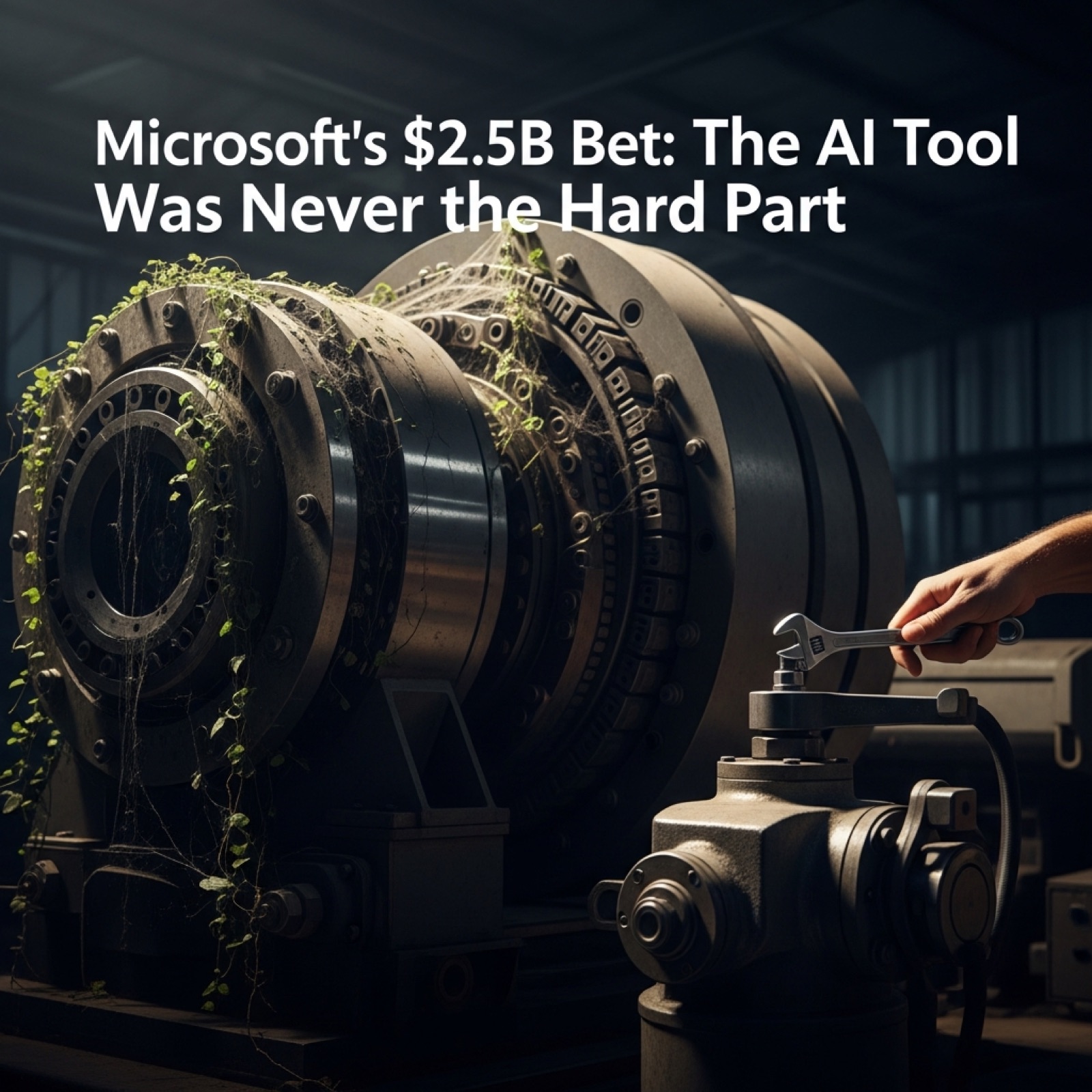
Microsoft just committed 2.5 billion dollars and 6,000 people to a new company. Not to build a smarter AI. To get businesses to actually use the AI they already bought.
The venture is called Microsoft Frontier Company, announced on July 2. Its job, in Microsoft's own words, is delivering successful deployments of the company's existing AI tools. The key word in that sentence is existing.
Microsoft is not alone. Two days earlier, Amazon put a billion dollars into the same idea. OpenAI and Anthropic launched their own versions in the spring. Four of the largest AI companies in the world looked at the same problem and reached the same conclusion.
Buying the tool was never where businesses got stuck.
Here is where I want to slow down. The story most people tell about AI is a story about capability. Better models, longer memory, faster answers. That story sells a lot of subscriptions. It also quietly assumes that once you have the tool, the value shows up on its own.
It doesn't.
A model that can draft a proposal does nothing until someone decides which proposals it drafts, checks the output, and folds it into how the team already works. That last part is the whole game. It is also the part no model update fixes.
Microsoft figured this out about its own customers. It has AI inside Office, inside Teams, inside tools most of the Fortune 500 already pay for. And it still needs 6,000 people to walk in and make that AI produce results. If the tool were enough, it would already be working.
There is a name for the people these companies are hiring. Forward-deployed engineers. They sit next to your team and shape the tool around your actual work, not a polished demo. The role exists because a generic tool and a specific business rarely meet in the middle on their own. Someone has to close that gap, and closing it is where the results come from.
You will never get a forward-deployed engineer from Microsoft. You do not need one. The insight scales down cleanly.
Pick one task your business does the same way every week. Chasing unpaid invoices. Drafting first-pass job quotes. Summarizing customer calls. Just one. Then treat AI for that task the way Microsoft treats a client. Someone owns the outcome, not the tool.
That means naming a person. It means writing down what good looks like before you start. It means checking the first ten outputs by hand and correcting what the AI gets wrong about your business, your customers, your pricing. This is boring work. It is also the whole difference between AI you paid for and AI that pays you back.
There is a temptation to read all this as bad news. If the giants need thousands of engineers, what hope does a five-person shop have?
Flip it. A five-person shop can change how it works in a single afternoon. The Fortune 500 needs 6,000 people because turning a battleship takes a crew. You are in a canoe. That is not a weakness. It is your biggest advantage over every competitor ten times your size.
The money everyone is spending right now is not going toward better AI. It is going toward the unglamorous work of making AI matter inside real companies.
That tells you where the value actually lives. Not in the next model. In the gap between owning a tool and putting it to work.
So the question worth sitting with is not which AI you should buy next. It is which single thing in your business you would trust AI to own, and what it would take to get there.
Free: AI Readiness Checklist
Find out if your business is ready for AI automation. 10 questions, 2 minutes.