AI Isn't Replacing Your Next Hire. It's Delaying It.
The median startup shed an employee after ChatGPT. Not because the job vanished. Because AI moved the moment you actually need to make the hire.
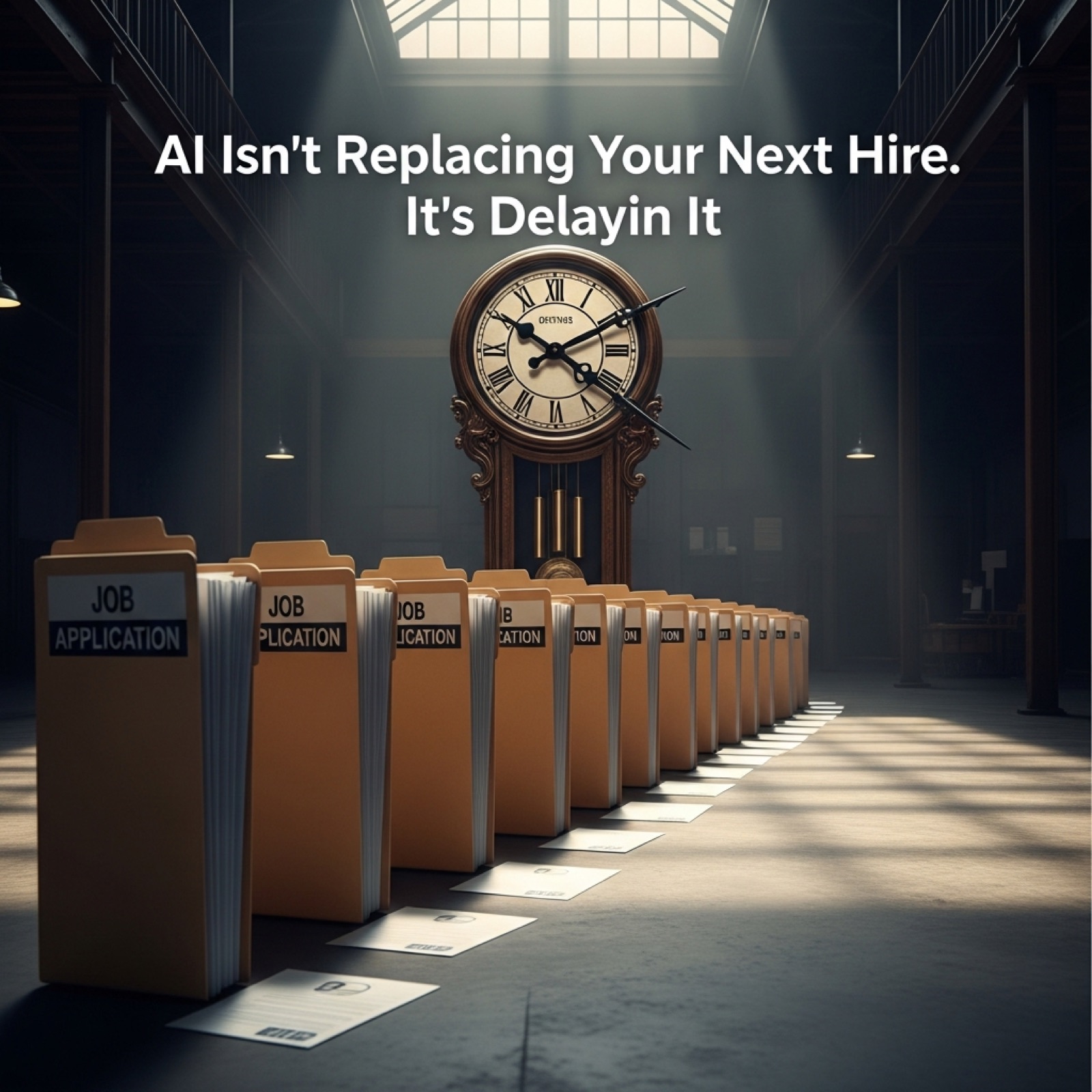
The median seed-stage startup had five employees before ChatGPT. One quarter after it launched, that number was four.
That comes from a July research note by Citadel Securities, reading Census Bureau data. It is a small drop. It is also the most useful number I have seen about AI and small business all year.
Here is why. The story most owners have been told is that AI replaces people. Fewer employees, same work. But the Citadel data points at something quieter and more interesting. The fifth hire did not vanish. It got deferred.
Think about it this way. Every role in a business has a moment when it starts paying for itself. You hire a bookkeeper when the books get too messy to ignore. You hire a marketer when you can no longer wing the newsletter at 11pm. Economists have a clunky name for that moment: the minimum efficient scale, the point at which a specialist becomes worth the money.
AI lowers that point. Not to zero. Lower.
A founder who used to need a bookkeeper at $30,000 in monthly revenue might now hold off until $60,000, because the software handles the routine passes and flags the exceptions. The hire is still coming. The judgment a good bookkeeper brings still matters. It just arrives later, once the business is bigger and can clearly afford it.
That reframe changes the question worth asking. Not "what can I automate away," which tends to make people either anxious or reckless. The better question is "which hire can I responsibly put off, and for how long."
You can answer that this afternoon. Take the next role you were planning to add. Write down the three things that person would spend most of their week doing. Then ask, honestly, how many of those three a tool could carry for the next six months without a human checking every output. Usually it is one, sometimes two. Rarely all three. The gap that remains is your actual hiring trigger.
Now the part I want to slow down on, because it is where the optimism gets complicated.
These gains are not automatic. PYMNTS Intelligence tracked small businesses over four years and found the ones earning more than a million dollars grew almost fourteen percent last year. The ones under $150,000 grew barely half a percent. Same economy, same tools available to both. The difference was who actually put the tools to work and who kept meaning to.
So the lower hiring threshold is real, but it rewards the businesses already paying attention. If you are not one of them yet, the technology does not carry you. It carries your more organized competitor.
You have probably seen the headline version of this. One telehealth founder built a company that reported $401 million in sales in its first year with, for most of that stretch, no employees but himself. Real story, reported by the New York Times. Also almost useless as a template, the way a lottery winner is useless as a savings plan. He outsourced every regulated, risky function to specialist partners and kept only the customer relationship. The lesson is not "one person can do everything now." It is closer to the opposite. He was ruthless about what to hand off.
That is the honest center of all this. AI does not erase the need for people who know things. It moves the moment you need them. The routine parts of a job get cheaper to cover, so the threshold drops, and the hire waits. But the day still comes when human judgment becomes the thing standing between you and your next stage. You cannot software your way past that. You can only postpone it.
Which is a strange kind of good news. The barrier to starting something has genuinely fallen. More people are walking through the door, up 24 percent since ChatGPT. But the skills that make a business durable, taste, judgment, knowing which customer to say no to, those did not get cheaper. They got scarcer by comparison, and more valuable.
So the useful question is not whether AI lets you run leaner. It clearly does. It is what you do with the room that buys you, before the hire you deferred finally knocks.
Free: AI Readiness Checklist
Find out if your business is ready for AI automation. 10 questions, 2 minutes.